
Style With Purpose: Why What You Wear Should Do Something
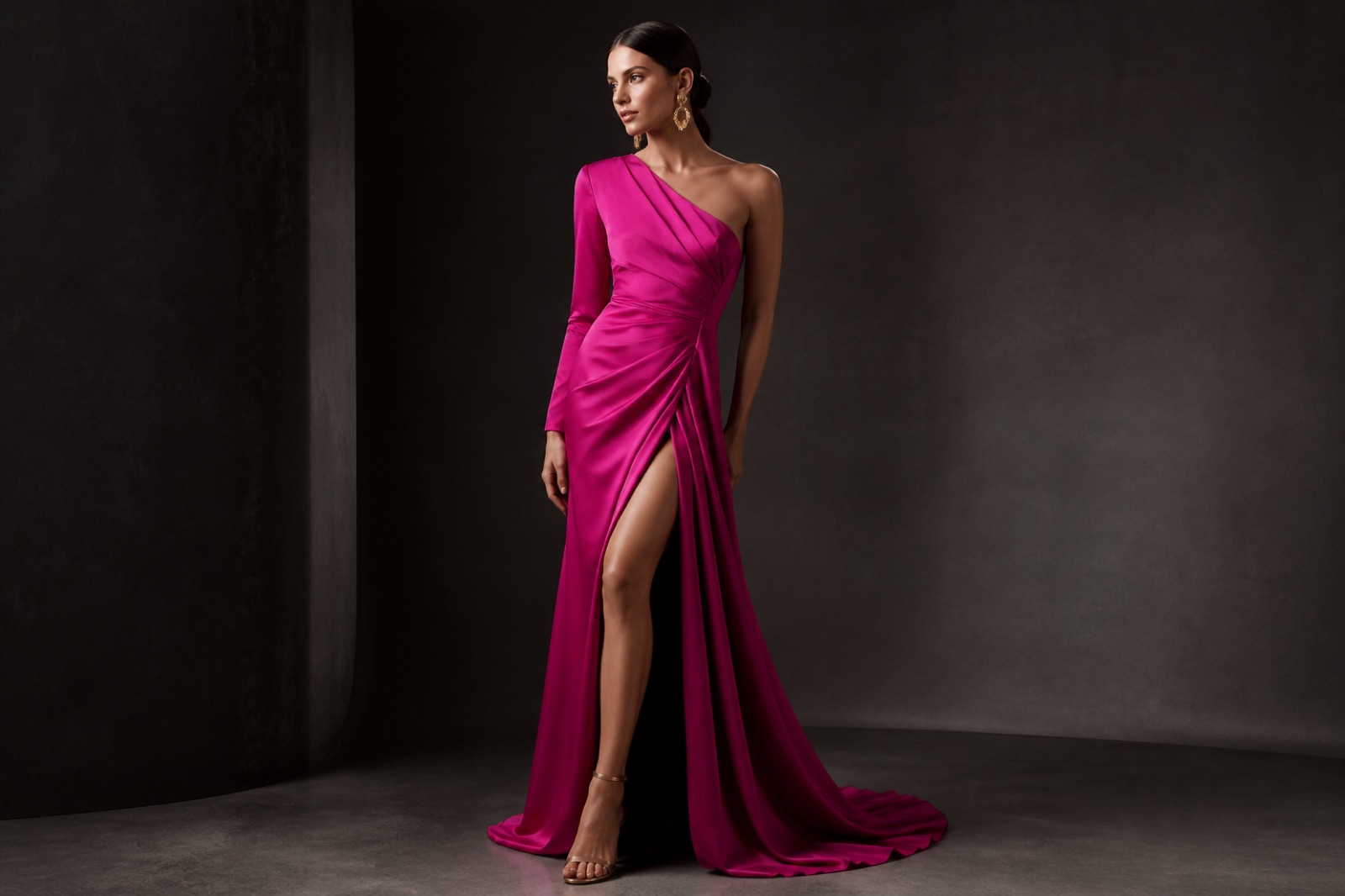
There is a moment, somewhere between the second coffee and the front door, when you decide who you're going to be today. You probably don't think of it as a decision. You reach for the black tee instead of the grey one, the gold hoops instead of the studs, the boots instead of the flats — and in ninety seconds you've drafted a manifesto you'll wear for the next fourteen hours. Everyone you meet will read it. Most will read it before you say a word.
That's the part of fashion nobody argues about. Clothes communicate. The part we want to argue for — the hill this house has been standing on since 2010 — is that communication is the floor, not the ceiling. What you wear shouldn't just say something. It should do something.
Your Clothes Are Already Talking
Psychologists gave the phenomenon a name a decade ago: enclothed cognition — the measurable effect of clothing on the wearer's own thinking. Put people in a lab coat they're told belongs to a doctor and their attention sharpens; tell them it's a painter's coat and it doesn't. The garment is identical. The story does the work.
Every woman who has worn a truly great dress already knew this without the footnotes. The right piece doesn't just change how you look; it changes how you stand, how you enter, how much nonsense you're prepared to tolerate in a given meeting (correct answer: less). When we drafted the first Coronation Gown, the fit model — a woman who had been apologizing her way through the fitting — put it on, looked in the mirror, and said, "Oh. There she is." That sentence is the entire business plan of this label.
But here's the uncomfortable follow-up question: if clothes are this powerful — powerful enough to change your own cognition and everyone else's read of you — why do we let most of them say nothing and do nothing at all?
The Empty-Calorie Wardrobe
Walk through the average closet and you'll find the sartorial equivalent of a junk-food drawer: pieces bought in a mood, worn twice, kept out of guilt. Fast fashion perfected this loop. The garment costs little, means less, and is engineered — sometimes literally, at the seam level — to be replaced within a season. The average garment today is worn just seven to ten times before disposal, and the fashion industry generates over 90 million tonnes of textile waste a year. Those aren't wardrobe statistics; they're landfill statistics wearing a price tag.
The damage isn't only environmental. An empty-calorie wardrobe costs you mornings. Decision fatigue in front of a rail of things you don't love, don't trust and can't remember buying is a genuinely bad way to start a day you intend to run. Nothing in that rail makes you stand differently. Nothing in it is on your side.
A closet full of clothes that mean nothing is just a very well-organized landfill with a mirror.
The Purpose Test
So here's the standard we propose, and the one we apply to every piece before it leaves the studio. A garment earns its hanger if it passes at least two of these three tests — the best pass all three:
- It does something for you. Posture, confidence, the "oh, there she is" moment. If a piece doesn't change how you carry yourself, it's fabric, not fashion.
- It does something for the world. A supply chain you could describe out loud without wincing. Construction built for a decade, not a season. Ideally, a cause attached — real money, moving to real work, on a schedule someone audits.
- It does something for the story. You should be able to say where it came from and why it's yours. Clothes with provenance get worn; clothes without it get donated in a bag you don't look inside.
Notice what's not on the list: trendiness, price point, logo visibility. A $46 tee can pass all three tests while a four-figure it-bag fails every one. Purpose is not a budget tier. It's a design decision, made long before the checkout page.
Cause Fashion, Done Right
We should be honest about the ways cause-driven fashion can go wrong, because it goes wrong constantly. The awareness tee with no disclosed donation. The "gives back" line where the giving is a rounding error dressed as a halo. The charity collab that spends more on the press release than the pledge. Skepticism here isn't cynicism — it's good taste.
Done right, the mechanics are boring, and boring is the point. Our version, Helping P.E.T.S., works like this: the claim must be plain enough that a shopper can understand what is donated, when it is donated, who receives it and where proof will appear. If those facts are not published yet, the language should stay general until brand review confirms the details. When the mechanism is that plain, the garment stops being a gesture and becomes infrastructure: recurring, unglamorous funding for the 2 a.m. surgeries and the spay campaigns nobody photographs.
And something interesting happens to the clothes themselves. A garment connected to a clear cause can invite care, repair and repeat wear, but only when the claim is specific and verifiable. Purpose is strongest when it survives questions.
A Wardrobe Audit in Five Moves
If you want to put this philosophy to work this weekend, here's the audit we recommend — no bin bags required until move four:
- Pull your ten most-worn pieces. Not the favourites — the workhorses. This is your real style, whatever your aspirational shelf says.
- Run each through the Purpose Test. You'll usually find your workhorses pass test one already. That's why they're workhorses.
- Identify the gaps by function, not by trend. "I need something that makes dinner feel like an occasion" is a brief. "I need whatever the algorithm showed me" is a symptom.
- Release what fails all three tests. Donate well: shelters and charity shops, not the void. One house rule worth stealing — every bag that leaves is matched by a donation, so even the exits do something.
- Replace slowly, with intent. One purposeful piece a season beats twelve accidental ones. Our capsule wardrobe guide has the exact starting twelve if you want a map.
Wear Something That Matters
None of this requires abandoning pleasure. The opposite, actually. The most joyful wardrobes we've ever seen are the small fierce ones — every hanger loaded with intention, every piece with a job and a story and, ideally, a cause claim clear enough to verify. Fashion's oldest slander is that caring about clothes is shallow. The truth is that clothes are one of the few daily choices that touch identity, economy and ethics all at once, before breakfast.
So tomorrow, between the second coffee and the front door, draft the manifesto on purpose. Wear the thing that makes you stand like yourself. If it also supports a verified rescue programme, say exactly how. That is couture doing its job without asking shoppers to guess.
The transparency check for cause fashion
Direct answer: purpose-driven fashion works when the garment is useful first and the cause claim is concrete, current and checkable. Wardrobe-planning competitors focus on function: lifestyle fit, outfit versatility, quality, gaps and slow replacement. Cause-marketing research in fashion points to brand credibility and cause fit as important purchase drivers, while the FTC's advertising guidance requires truthful, evidence-backed claims. If a product claim mentions donations, impact or rescue outcomes, the brand needs specific proof before publishing numbers.
For Royal Bitch Couture, that means keeping style copy bold while treating Helping P.E.T.S. claims conservatively: no invented shelters, totals, percentages, placement counts or medical outcomes. Link to Helping P.E.T.S. for verified programme details and update the article when brand review approves exact language.
Purpose-style FAQ
- What makes a piece purposeful?
- It fits your real life, carries the attitude you want to project, and has a clear role beyond one impulse wear.
- How should donation claims be written?
- Use exact amounts, recipients, timing and proof only when those details are verified and current.
- What should I buy first?
- Replace the biggest functional gap in your wardrobe, not the loudest trend in your feed.