
Dressing for Yourself Without Ignoring the Occasion
Direct answer
Direct answer: dress for yourself without ignoring the occasion by separating the event's requirements from your style choices. Meet the room's baseline for formality, movement and respect, then choose one or two personal elements that make the outfit unmistakably yours.
The false choice is familiar: either dress exactly like the invitation expects or arrive as if every room is only a stage for personal expression. Neither extreme is very stylish. The first can make you feel erased. The second can make the outfit look more interested in attention than presence.
Good occasion dressing is a negotiation, not a surrender. You read the event, the venue, the weather, the people and the practical demands. Then you decide where your point of view belongs. Sometimes it belongs in a dramatic dress. Sometimes it belongs in a strange shoe, a hard jacket, a color that refuses to whisper or a silhouette that changes the whole posture of the look.
Read the occasion before you read your closet
Start with the external facts. What is the event? Who is hosting? Where is it happening? Is there a written dress code? Will you sit, walk, dance, stand outside, climb stairs, meet clients or hold a drink for three hours? The Emily Post attire guide is useful because it treats dress codes as social signals, not as mystical rules. Formal, semi-formal, dressy casual and casual each set a different baseline.
Baseline does not mean costume. It means the minimum level of polish the occasion asks for. A rooftop birthday, a gallery opening, a courthouse appointment and a backyard dinner may all allow personal style, but they do not ask for the same fabric, heel, exposure, bag or amount of visual noise.
If the dress code is vague, use context. Evening usually tolerates more drama than morning. A private home asks for different movement than a hotel ballroom. A professional gathering can still allow personality, but the outfit should not make the work harder. The smartest look is the one that understands where it is going.
Keep yourself visible inside the frame
Once the frame is clear, bring yourself back into the decision. Personal style is not a label you buy. Current personal-style guides often start with evidence: what you actually wear, what repeats in your saved images and which silhouettes feel believable on your body. That evidence matters more than an aesthetic name.
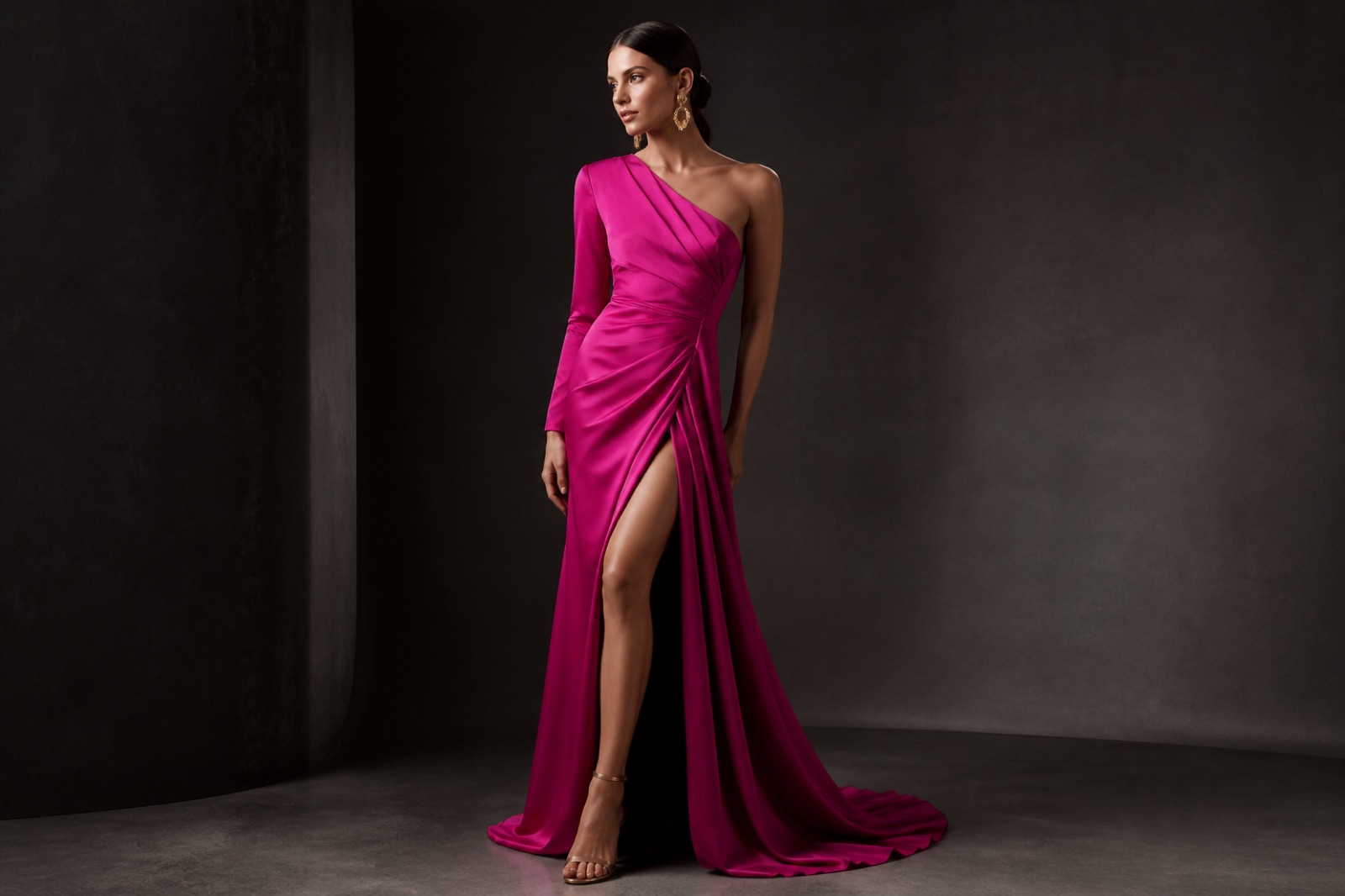
For Royal Bitch Couture, the question is not how to become quieter. It is how to make boldness intentional. A dress from Signature Dresses can be occasion-aware when the fit, length, fabric and styling respect the setting. A graphic top can be polished when the rest of the outfit gives it structure. A sharp color can feel elegant when the silhouette is controlled.
Choose one personal anchor. It might be color, shape, texture, print, jewelry, makeup or attitude. Then let the rest of the outfit support it. If every element shouts, the room hears static. If one element leads, the outfit has a voice.
Use an intensity dial
Think in dials, not switches. You do not have to choose between "safe" and "too much." You can raise or lower intensity in five places: color, shine, skin, volume and contrast. For a formal event, you might keep the silhouette classic and turn up color. For a casual event, you might keep the fabric easy and turn up print. For a professional room, you might reduce skin and shine while keeping a strong shoulder or shoe.
This method keeps personal style adaptable. A high-volume skirt with a quiet top may work where a high-volume skirt, loud top, metallic bag and dramatic shoe would fight the room. A black dress can still be personal if the neckline, cuff or boot has a point of view. A tee from Tees & Tops can move from casual to deliberate when paired with tailored separates and a cleaner finish.
The dial also helps you avoid panic shopping. If you know the event needs medium polish and high personality, you can search for the missing role instead of buying a full new identity. Maybe the closet already has the lead piece and only needs an anchor.
Respect movement, weather and duration
An outfit that only works for the first photograph is not finished. Occasion dressing includes the body's boring realities: temperature, walking distance, seating, fabric itch, strap security, shoe tolerance and whether you can carry what you need. Style does not become less serious when it accounts for movement. It becomes more believable.
Before leaving, test the outfit under the conditions the event will create. Sit down. Reach forward. Walk on a similar surface. Check the bag. Add the coat. If the whole look depends on standing still in perfect indoor light, it may be a picture, not an outfit.
Comfort is not the same as softness. A structured jacket can be comfortable if it fits. A dramatic dress can be easy if the fabric moves. Exercise pieces from Yoga & Exercise can be part of a real day when styled with intention after the workout. The point is not to lower the ambition. The point is to make the ambition wearable.
Keep purpose honest
Royal Bitch Couture's world includes Helping P.E.T.S., so purpose belongs in the brand conversation. It also needs discipline. This article does not invent donation totals, shelter partnerships, impact claims or product availability. The ASPCA's shelter responsibility statement emphasizes care, transparency and accountability; those values are a reminder that purpose language should be documented, not decorated.
The same honesty belongs in personal style. Do not dress as a fantasy version of yourself who cannot move, breathe, work or relax. Do not flatten yourself into someone else's etiquette chart either. Let the occasion set the floor. Let your taste set the ceiling.
The final mirror check
Ask four questions. Does this meet the room? Does it still feel like me? Can I move through the event without fussing? Is one element clearly leading? If the answer is yes, stop adding. If the outfit feels too quiet, raise one dial. If it feels chaotic, lower one dial and keep the strongest choice.
Dressing for yourself without ignoring the occasion is not politeness at the expense of personality. It is editing. You decide what the room needs, what you need and where the outfit can carry both. The best look does not apologize for being seen, and it does not pretend the room is irrelevant.
FAQ
Does respecting the occasion mean dressing boring?
No. It means understanding the baseline, then choosing where your style can speak clearly.
What if the dress code is vague?
Use venue, time, host, weather and expected movement to estimate formality. Then add one personal anchor.
Can bold style work at formal events?
Yes. Keep fit, fabric and proportion polished, then let color, shape or one accessory carry the attitude.
The room matters. So do you. The art is refusing to erase either one.
Sources consulted: Emily Post attire guide, Wildflower Wardrobe occasion outfits, Style by Cher personal style guide, TryTheClothes personal style guide, ASPCA shelter responsibility statement. Featured image: existing site asset, /assets/img/photo-hero.jpg.